The Mabel Blog
Practical insights on voluntary alignment, SDoH data collection, beneficiary notification letters, and more — from the team running accountable care operations at scale.

SDoH Screening at Scale: Automating Data Collection for VBC Programs
CMS raised the ACO REACH quality withhold to 5% for PY2026, putting more money behind SDoH reporting. See what CMS requires and where manual screening breaks down at scale.
Read More →
Value-Based Care Technology: The Stack Behind Modern ACO Operations
For MSSP ACOs, value-based care technology is about more than quality scores. It means parsing CMS data on schedule, sending Beneficiary Information Notices on time, and keeping records an auditor can use. Here’s what belongs in your stack, where compliance breaks down, and how to build for audits.
Read More →
MSSP Beneficiary Information Notices: How to Build an Audit-Ready Compliance Trail
The Beneficiary Information Notice is one of MSSP’s most routine requirements, and one of the easiest to get wrong. See what CMS’s September 2026 guidance requires, what may change with the 180-day follow-up, and how to build an audit-ready process every quarter.
Read More →
Value-Based Care Solutions: Infrastructure for Growing Aligned Lives
CMS’s LEAD model gives ACOs until January 1, 2027 to hit their aligned-beneficiary minimums. Here’s what counts as “aligned,” where voluntary alignment campaigns break down, and how to build the process before the runway runs out.
Read More →
ACO REACH SDoH Reporting and Year-End Priorities for 2026
ACO REACH’s final performance year raises the financial stakes of SDoH reporting. Learn how to close reporting gaps, validate records, and coordinate beneficiary notices before key year-end deadlines.
Read More →
Claims-Based vs. Voluntary Alignment: Closing the Patient Alignment Gap
Claims-based alignment captures only about 40% of an ACO’s eligible patients. Learn how voluntary alignment closes the gap under ACO REACH and LEAD.
Read More →
Voluntary Alignment for ACOs: How the Process Works and When to Outsource It
With the LEAD model launching January 1, 2027, voluntary alignment is becoming a more frequent, process-driven opportunity for ACOs. Learn how the workflow runs from outreach to confirmed alignment, which CMS deadlines matter for PY2027, and the criteria for choosing between an internal process and
Read More →
Inside the ACO LEAD Model: Prospective vs Hybrid Alignment
LEAD’s prospective and hybrid alignment options run on different schedules. Here’s how ACOs can match each to their provider network, growth plans, and operating capacity.
Read More →
ACO REACH vs MSSP: How the Models Differ and Where LEAD Fits
ACO REACH ends December 31, 2026. LEAD takes over January 1, 2027. Between now and then, REACH and MSSP ACOs are making operational decisions around alignment, SDoH reporting, and beneficiary notifications that will shape how ready they are for whatever comes next.
Read More →
LEAD Model vs ACO REACH: What Changes When REACH Ends December 31, 2026
ACO REACH ends December 31, 2026, and the LEAD Model takes its place on January 1, 2027 — leaving REACH’s remaining participants running two clocks at once: closing out final SDoH reporting tied to real settlement dollars, while building LEAD’s alignment and notification infrastructure from scratch.
Read More →
ACO REACH News: Program Changes, Sunset Timeline, and the LEAD Transition
With ACO REACH sunsetting on December 31, 2026, organizations are juggling two deadlines simultaneously, final SDoH data collection tied to this year’s REACH quality score, and groundwork for the LEAD Model’s stricter alignment thresholds starting PY1 2027. Here’s what CMS still requires before REAC
Read More →
ACO LEAD: How New Entrants Can Achieve the 5,000 Aligned-Life Threshold
ACO LEAD’s New Entrant track starts ACOs at 1,000 aligned Medicare beneficiaries instead of 5,000, but requires adding roughly 1,000 lives a year for five years straight. Here’s what that ramp actually demands, and why manual outreach rarely keeps pace.
Read More →
The CMS LEAD Model: What ACOs Need to Know Before the 2027 Performance Year
The CMS LEAD Model begins in 2027, bringing major changes to beneficiary alignment, benchmarking, risk, and compliance. Learn what ACOs need to know to build scalable workflows for voluntary alignment, beneficiary notifications, documentation, and long-term success under the new ten-year model.
Read More →
Introducing Mabel for LEAD
Under the LEAD model, voluntary alignment is the most effective lever for growing beneficiary attribution. Here’s why ACOs partner with Mabel — trusted by 1 in 3 ACO REACHs — instead of building an in-house team.
Read More →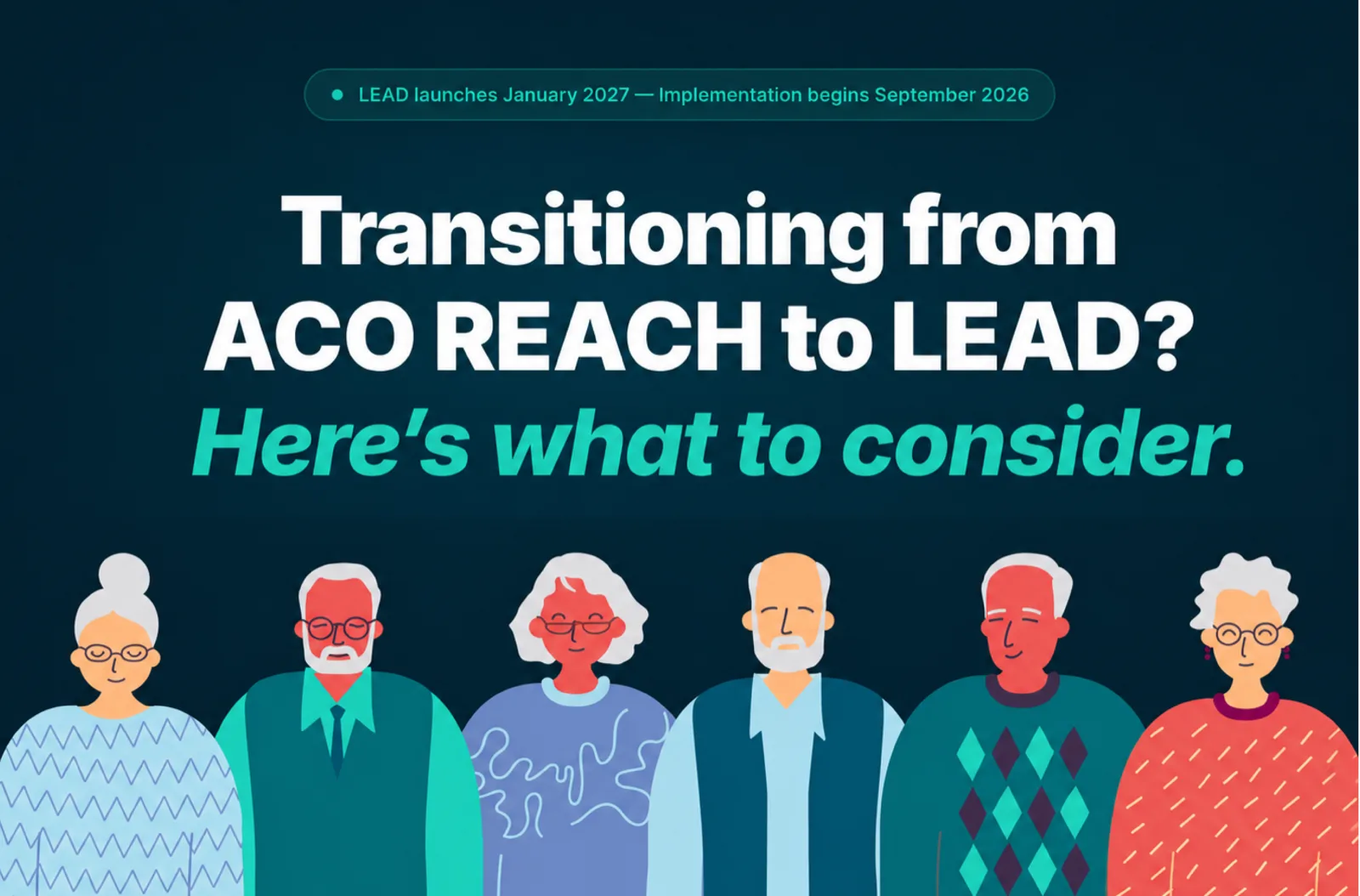
Transitioning from ACO REACH to LEAD? Here’s what to consider.
As ACOs prepare for the LEAD model launching January 1, 2027, four structural changes reshape how voluntary alignment drives beneficiary attribution — monthly submissions, a 12-month lookback, practice-level SVA, and priority attribution.
Read More →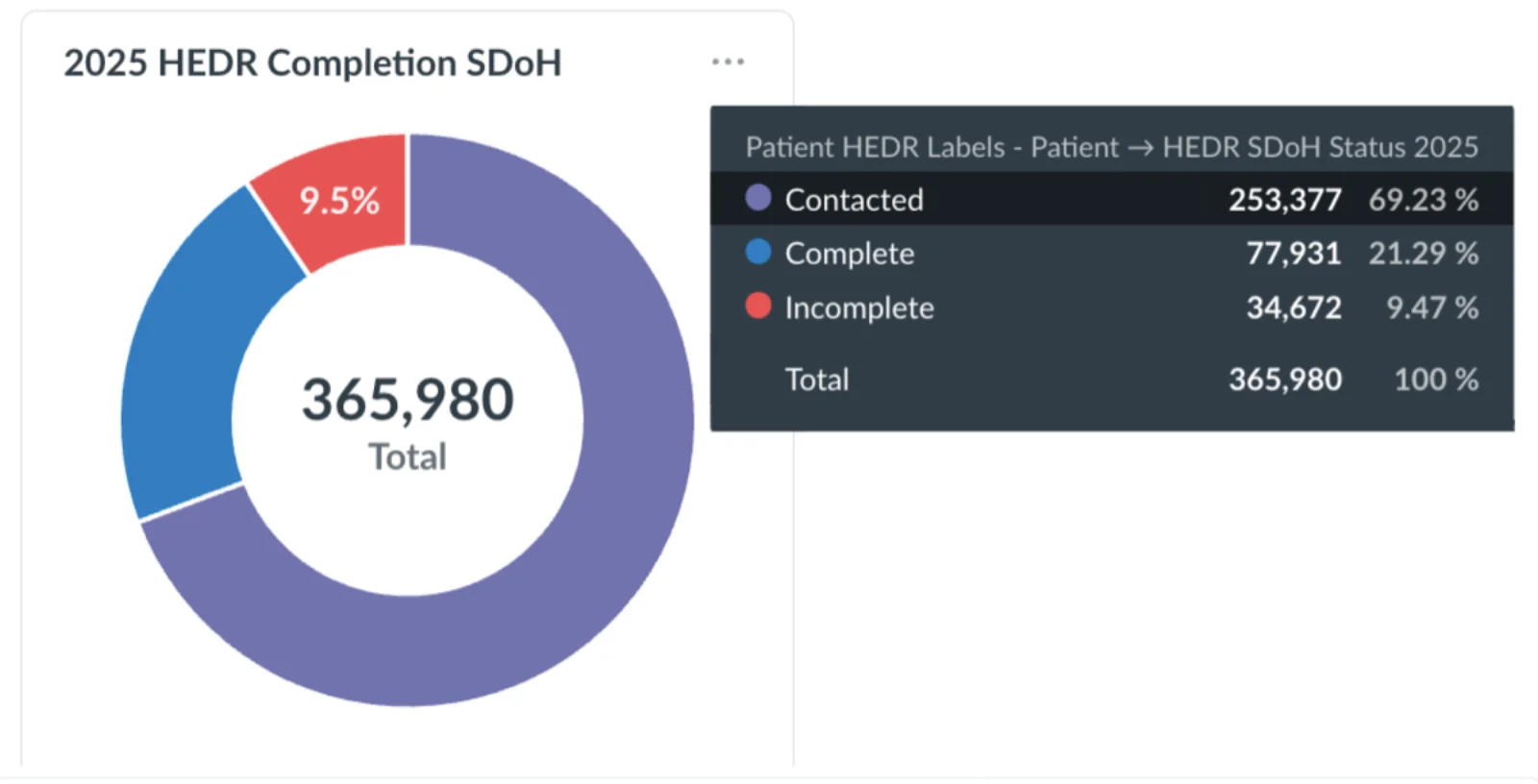
Mabel helped 35 ACO REACHs submit >95% SDoH data reporting to maximize earn back
The results speak for themselves: in PY25, all of Mabel's ACO partners achieved nearly 100% SDoH reporting, realizing a 6X–19X ROI.
Read More →
100% SDoH Data Reporting to Maximize Your PY25 Earn Back
In PY2025, CMS will use Social Determinants of Health (SDoH) data reporting to determine your ACO’s Quality Withhold Earn Back. Here’s how Mabel makes 100% reporting simple.
Read More →
CMS launches GUIDE Model for dementia care
The Guiding an Improved Dementia Experience (GUIDE) Model is a new program from CMS that aims to improve the quality of life for people living with dementia and their caregivers. GUIDE is a voluntary, risk-free, 8-year model running from July 1, 2024, through June 30, 2032.
Read More →
PY23 HEDR Results & PY24 SDoH: What’s your strategy?
In looking ahead to the PY24 HEDR submission, Mabel has been focused on helping our ACO partners achieve similar or greater success despite the heightened challenges of collecting Social Determinants of Health (SDoH) data.
Read More →
HEDR Success Stories
Within just 2 weeks of kicking off with Mabel, this ACO REACH captured >90% of their PY23 HEDR data—and is on track to earn back the full $100K of their HEDR adjustment.
Read More →
High Needs ACOs face unique voluntary alignment challenges
Voluntary alignment represents a significant opportunity to help High Needs ACOs keep pace with natural attrition. However, a combination of compliance restrictions and difficult-to-target home-based and institutional care patients, can make voluntary alignment challenging.
Read More →
Mabel Introduces Streamlined Beneficiary Notification Letters™
CMS requires ACOs to send Beneficiary Notification Letters to newly aligned members on a regular basis. Mabel has introduced Streamlined Beneficiary Notification Letters™ to better leverage our technology platform capabilities and support our ACO clients.
Read More →
ACO REACH: Maximize your PY23 HEDR Adjustment
Under Health Equity Data Reporting (HEDR), CMS is now incentivizing ACOs to collect beneficiary-reported demographic and SDOH data on aligned beneficiaries. As part of this initiative, ACO REACHs can earn up to 0.2% of the ACO Benchmark—representing a significant financial opportunity in 2023 alone.
Read More →
Staying Compliant in ACO REACH
Voluntary alignment can generate significant financial gain for ACO REACHs; however, without rigorous oversight, adhering to CMS guidelines can be a challenge.
Read More →
Running voluntary alignment in-house? Here’s what to consider.
Voluntary alignment is a laborious, manual process that is prone to errors and requires a large dedicated team—which can be both costly and produce weak results.
Read More →
What is the #1 tactic for voluntary alignment?
Which voluntary alignment tactic is most effective in generating new alignments? After sending out 250,000 SVA packets and processing more than 100,000 SVA forms, here’s what we’ve seen.
Read More →
Best Practices for Voluntary Alignment
Mabel’s turn-key voluntary alignment solution helps ACO REACHs substantially increase their aligned lives
Read More →Want to see Mabel in action?
Talk to our team about voluntary alignment, HEDR, GUIDE, or beneficiary notification letters.